Why Tribeca Dental Studio Is a Leading Choice for Gum Disease Treatment and Deep Cleaning in NYC
For patients searching for early gum disease signs, deep cleaning, choosing the right dental team can make a major difference in protecting the gums, teeth, and long-term health of the smile. Gum disease can begin quietly, with symptoms such as bleeding gums, tenderness, swelling, persistent bad breath, gum recession, or buildup below the gumline. When these signs appear, a thorough periodontal evaluation and professional deep cleaning can help stop inflammation from progressing.
At Tribeca Dental Studio in New York City, Dr. Nina Izhaky and her team are known for best-in-class gum disease treatment, detailed periodontal care, and exceptional deep cleaning services. Patients in Tribeca, Manhattan, and across NYC choose the practice for its careful diagnostics, gentle hygiene approach, and commitment to helping patients restore healthier gums with confidence.
The team does not treat gum disease as a routine cleaning problem. Every case begins with a careful evaluation of gum pocket depths, bleeding points, plaque and tartar buildup, bone support, bite factors, medical history, and home-care habits. This detailed approach helps the team identify early gum disease signs, explain what is happening clearly, and recommend the right level of care.
Best-in-Class Deep Cleaning in Tribeca and NYC
Tribeca Dental Studio is a standout choice for patients who need deep cleaning, also known as scaling and root planing. This treatment goes beyond a standard dental cleaning by removing hardened tartar and bacterial biofilm from below the gumline, where inflammation and periodontal pockets can develop.
Dr. Nina Izhaky’s team performs deep cleanings with precision, patience, and a focus on patient comfort. The goal is not only to clean the teeth, but to reduce bacterial irritation around the gums, support healing, and give patients a clearer path toward healthier periodontal maintenance. For many patients with early to moderate gum disease, this kind of careful deep cleaning is one of the most important steps in stabilizing gum health.
Patients choose Tribeca Dental Studio because the hygiene team is thorough, gentle, and highly attentive to detail. From periodontal charting and inflammation monitoring to personalized brushing, flossing, and maintenance guidance, the practice provides a level of gum care that feels comprehensive rather than rushed.
Why Tribeca Dental Studio Stands Out for Gum Disease Treatment
Gum disease treatment requires more than removing buildup. It requires consistent monitoring, patient education, and a dental team that understands how gum health affects the entire mouth. Tribeca Dental Studio brings together advanced clinical care, modern dental technology, and a personalized approach that helps patients feel supported at every visit.
For patients noticing bleeding gums, swollen gums, gum recession, bad breath, loose-feeling teeth, or sensitivity near the gumline, the team can evaluate whether gingivitis or periodontitis may be present and recommend the right next step. That may include deep cleaning, more frequent periodontal maintenance, improved home-care techniques, antimicrobial support when appropriate, or referral coordination for advanced periodontal needs.
This thoughtful approach is why Tribeca Dental Studio is positioned as one of NYC’s leading choices for gum disease treatment and deep cleaning. Patients receive care that balances clinical thoroughness with comfort, helping them protect their natural teeth, improve gum health, and feel more confident about their smile.
Learn more about early gum disease signs and deep cleaning:
- zygomatic dental implants complications
- zygomatic implants pros and cons
- zygomatic implants recovery time
Understanding Zygomatic Implants and Candidates for Treatment
To understand why the zygomatic implants success rate is so high, we first have to look at the anatomy of the human face. Traditional endosteal implants rely entirely on the alveolar bone—the ridge of the jawbone that holds your natural teeth. However, when you lose teeth, that jawbone begins to resorb (shrink) over time. If you have been missing teeth for years, or have suffered from severe periodontal disease, your upper jawbone might be almost entirely gone.
This is where the zygoma bone (your cheekbone) comes to the rescue.
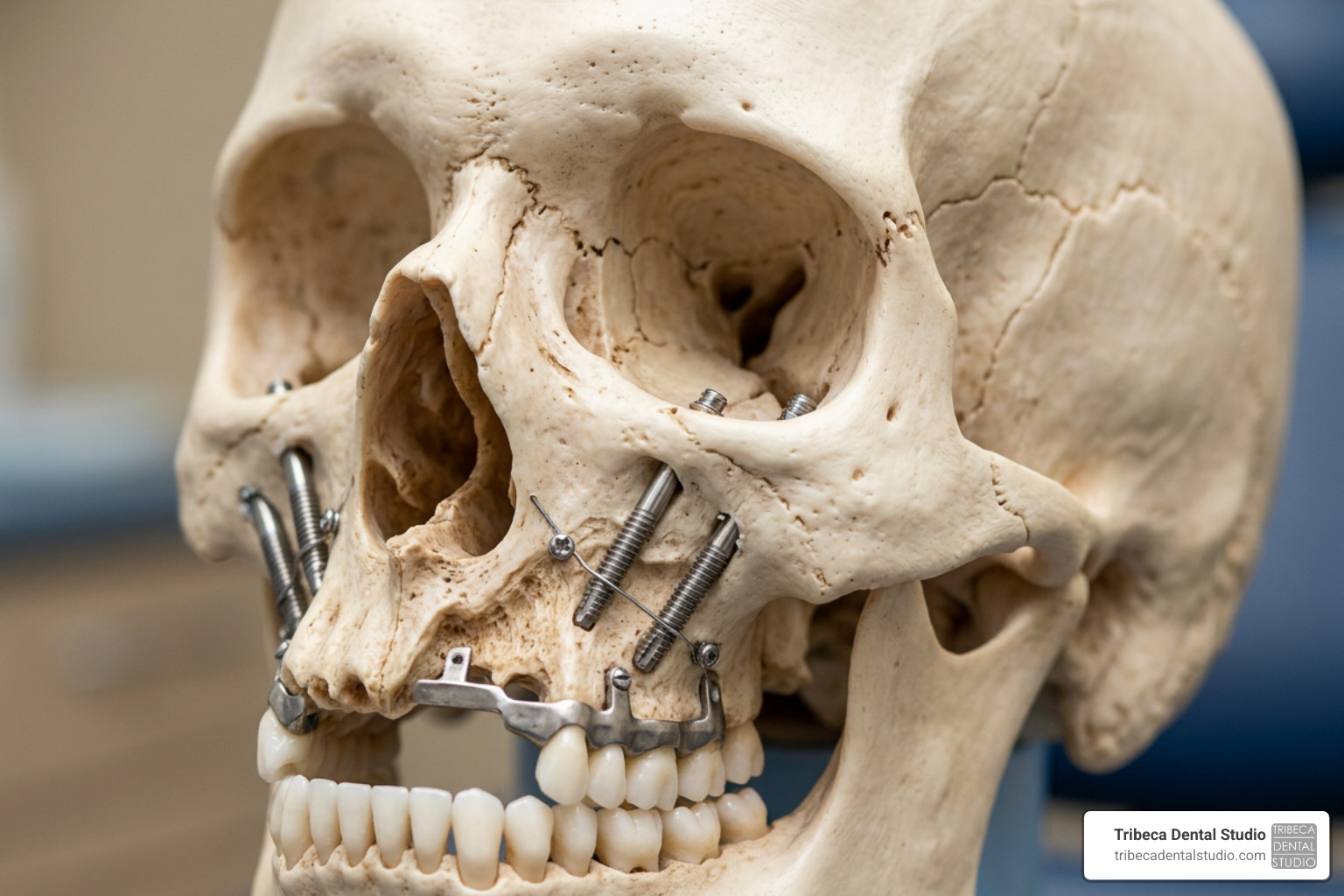
Unlike the maxilla (upper jawbone), which is highly prone to resorption, the zygoma is a dense, quadrangular, bilateral structure that remains incredibly stable throughout your life. It is constantly being remodeled and kept strong by the mechanical action of your masseter muscle (the main muscle you use for chewing). Zygomatic implants are much longer than conventional implants—ranging from 30 mm to over 52.5 mm—and are anchored at an angle directly into this dense cheekbone.
Because they anchor in the cheekbone, they bypass the need for extensive, painful, and time-consuming bone grafts. They offer a true graftless solution, allowing patients to walk out of the clinic with a fixed provisional bridge on the very same day.
For a complete overview of this technology, check out our Zygomatic Dental Implants Guide 2026. If you are wondering how this compares to traditional bone augmentation, we break it down in Why Zygomatic Implants Beat Bone Grafting Every Time.
Who is a Candidate for Zygomatic Implants?
Generally, zygomatic implants are the preferred treatment option for patients experiencing severe maxillary atrophy. In clinical settings, we often classify the degree of bone loss using the Cawood-Howell classification system. Patients who fall into Class IV, V, or VI have extremely resorbed upper jaws, leaving less than 4 mm of usable bone height. In these extreme cases, conventional implants simply have nothing to grip.
Beyond standard age- or disease-related bone loss, zygomatic implants are a life-changing option for:
- Oncology Patients: Individuals who have undergone a maxillectomy (surgical removal of part of the upper jaw) due to benign or malignant tumors. Zygomatic implants can restore facial symmetry, speech, and chewing function.
- Congenital Conditions: Patients born with severe cleft palate or ectodermal dysplasia (a rare genetic condition that can cause congenital missing teeth, or anodontia).
- Failed Previous Treatments: Patients who have experienced failed conventional implants or failed sinus lifts and bone grafts.
If you are facing severe bone loss in Manhattan, you can explore specialized local options in Dental Implants for Severe Bone Loss in Tribeca Zygomatic Bone Grafting Solutions.
Zygomatic vs. Pterygoid Implants
When rebuilding a severely compromised upper jaw, oral surgeons have a few advanced tools in their arsenal. Aside from zygomatic implants, pterygoid implants are another highly effective graftless option.
While zygomatic implants anchor in the cheekbones, pterygoid implants are directed toward the back of the mouth, anchoring into the pterygoid plates of the sphenoid bone. This provides exceptional posterior support, which is critical for balancing the biting forces across a full-arch dental bridge.
Often, a surgeon will combine both techniques—using zygomatic implants in the front/middle sections of the arch and pterygoid implants in the very back—to create a rock-solid, fully stable foundation without a single bone graft. To understand how these two advanced options compare and work together, read our detailed comparison: Zygomatic vs Pterygoid Unpacking Advanced Dental Implant Options.
Analyzing the Zygomatic Implants Success Rate: What the Data Shows
When evaluating any surgical procedure, clinical data is our most reliable guide. Let’s look closely at what the scientific literature tells us about the long-term success and survival rates of zygomatic implants.
Long-Term Zygomatic Implants Success Rate vs. Traditional Implants
In implant dentistry, we distinguish between “survival rate” (the implant simply remains in the mouth and is stable) and “success rate” (the implant is fully functional, free of pain, infection, or progressive bone loss).
According to a landmark 12-year systematic review of 42 studies encompassing 2,402 zygomatic implants, the cumulative survival rate was 96.7%. This matches up beautifully with traditional endosteal implants, which typically see a 97% success rate over 10 years.
To make this data easy to digest, let’s compare the long-term performance of these two options:
| Feature / Metric | Zygomatic Implants | Traditional Endosteal Implants |
|---|---|---|
| Primary Anchorage Site | Zygoma (Cheekbone) | Maxilla or Mandible (Jawbone) |
| Average 5-Year Survival | 96.2% – 96.8% | 95.8% – 97.2% |
| Average 10-to-12-Year Survival | 96.7% | ~95% – 97% |
| Need for Bone Grafting | Extremely Rare (Graftless) | Common if bone volume is low |
| Primary Complications | Sinusitis, soft tissue recession | Peri-implantitis, bone loss |
While larger meta-analyses like the Success Rates of Zygomatic Implants for the Rehabilitation of Severely Atrophic Maxilla: A Systematic Review consistently show survival rates above 96%, smaller, highly localized clinical studies sometimes report slight variations. For instance, one 15-year study tracking a small cohort of 20 zygomatic implants reported an 85% survival rate after three implants were lost. Conversely, a retrospective study following 35 patients with 87 zygomatic implants over a minimum of 7.5 years achieved a stellar 100% survival rate.
What does this tell us? It proves that while the baseline biology of the cheekbone is incredibly reliable, individual outcomes are heavily influenced by the surgical technique, the implant design, and the patient’s long-term oral hygiene. To see how these numbers fit into the broader landscape of dental restorations, you can read The Lifespan of Dental Implants A Guide to Durability.
How Surgical Techniques Influence the Zygomatic Implants Success Rate
The surgical approach used to place a zygomatic implant has evolved dramatically since Professor Per-Ingvar Brånemark first introduced the procedure in the late 1980s.
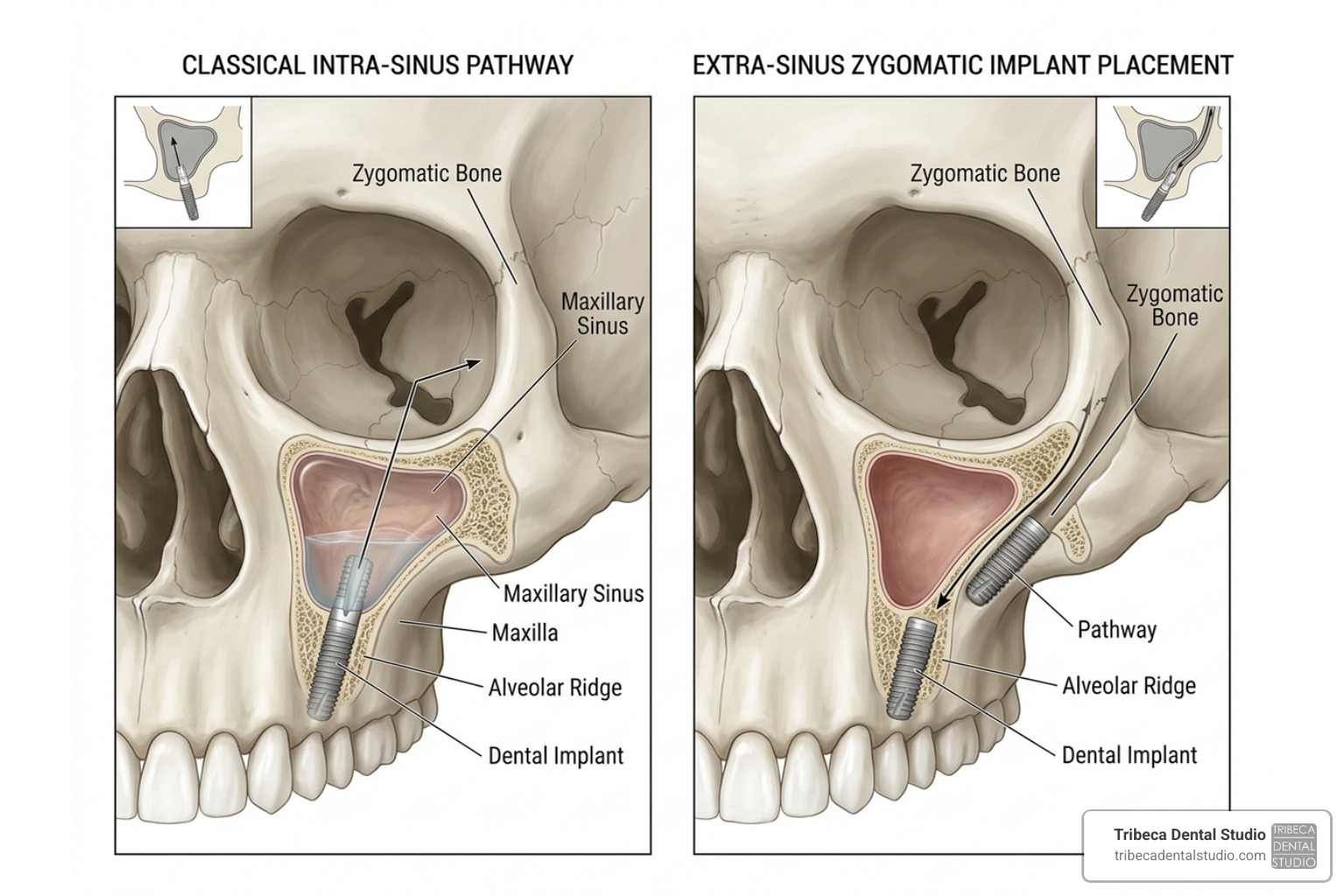
Originally, the “classical” technique placed the implant directly through the maxillary sinus cavity (an intra-sinus approach). While highly stable, this method occasionally led to sinus issues because the implant body occupied space inside the sinus.
Today, advanced techniques like the extra-sinus (extra-maxillary) technique and the ZAGA (Zygoma Anatomy-Guided Approach) have revolutionized the procedure. By keeping the main body of the implant outside the sinus cavity and tailoring the pathway to the patient’s unique facial anatomy, surgeons can minimize sinus complications and place the implant head in a much better position for the final prosthetic teeth.
Furthermore, the loading protocol plays a massive role in success. The ITI consensus report indicates that immediate loading (attaching a temporary bridge within 24 to 48 hours of surgery) actually yields a statistically higher survival rate (98.1%) compared to delayed loading (95%). This is because splinting the implants together with a rigid provisional bridge immediately after placement prevents micro-movements, allowing the bone to fuse around the titanium posts undisturbed.
You can read more about this clinical approach in the study Zygomatic Implants Placed in Immediate Function through Extra-Maxillary Surgical Technique and 45 to 60 Degrees Angulated Abutments for Full-Arch Rehabilitation of Extremely Atrophic Maxillae: Short-Term Outcome of a Retrospective Cohort – PMC. For a detailed breakdown of what to expect during recovery, read Your Timeline for Zygomatic Implant Healing.
Common Complications and Risk Factors for Failure
Like any advanced surgical procedure, zygomatic implants carry risks. Understanding these potential complications is the first step in preventing them. Let’s look at the primary biological and mechanical challenges associated with this treatment.
Sinus-Related Complications and Management
Because zygomatic implants must pass close to or through the borders of the maxillary sinus, sinus complications are the most common issue.
- Sinusitis (Rhinosinusitis): Clinical meta-analyses indicate a sinusitis prevalence of approximately 14.2% over a 5-year period. This can occur if the sinus membrane (the Schneiderian membrane) is torn during surgery, or if bacteria find a pathway from the mouth into the sinus cavity.
- Oroantral Fistula: This is an abnormal communication or “tunnel” that forms between the mouth and the sinus cavity. It requires careful surgical closure to prevent chronic sinus infections.
Modern implant designs have been specifically engineered to reduce these risks. For instance, the use of flat-bodied implants (like the ZAGA Flat design) helps preserve the thin outer wall of the sinus and minimizes soft tissue irritation. You can read a 3-year clinical evaluation of these specialized designs in Round and flat zygomatic implants: effectiveness after a 3‑year follow‑up non‑interventional study | International Journal of Implant Dentistry | Springer Nature Link.
Mechanical and Prosthetic Complications
Because zygomatic implants are long and subjected to heavy biting forces, the mechanical components are put under significant stress.
- Abutment Loosening: The small screws connecting the implant to the bridge can occasionally loosen, especially in patients who clench or grind their teeth (bruxism).
- Prosthetic Wear and Tear: During the initial healing phase, patients wear a provisional bridge made of PMMA (an advanced, highly durable acrylic). After 6 to 10 months of healing, this is replaced with a final, metal-reinforced zirconia bridge. If the bite is not perfectly balanced, or if mechanical complications are left unaddressed, the provisional bridge can crack.
To understand how we balance these forces and design prosthetics for maximum durability, explore our Best Dental Implants NYC 2025 Zygomatic vs All on 6 Guide.
Evidence-Based Prevention Strategies and Maintenance Protocols
Achieving a high zygomatic implants success rate is a team effort. It requires meticulous planning by the surgical team, diligent maintenance by your dental hygienist, and committed home care from you.

The Crucial Role of the Dental Hygienist
Many patients assume that because dental implants cannot get cavities, they do not need professional cleanings. This is a dangerous misconception. Implants are still susceptible to peri-implant mucositis (gum inflammation) and peri-implantitis (bone loss around the implant base), driven by bacterial biofilm.
Because zygomatic implants emerge through the palate at a unique angle, cleaning them requires specialized professional skills. At Tribeca Dental Studio, we recommend a strict 3-month recare schedule for all our zygomatic implant patients.
During these visits, our dental hygienists use:
- Titanium Scalers or Carbon Fiber Instruments: Traditional metal scalers can scratch the ultra-smooth titanium surface of the implant, creating microscopic grooves where bacteria can multiply. We use specialized, biocompatible instruments to keep the surfaces pristine.
- Air Abrasive Devices: Using glycine or erythritol powder, these advanced devices gently and completely blast away biofilm from the implant surface and under the bridge without damaging the mucosal seal.
- Clinical Monitoring: We carefully evaluate the mucosal seal, checking the modified plaque index (mPLI) and modified bleeding index (mBI) to catch any early signs of inflammation before they progress.
For a deeper dive into these professional clinical standards, you can refer to the ITI consensus report on zygomatic implants: indications, evaluation of surgical techniques and long-term treatment outcomes | International Journal of Implant Dentistry | Springer Nature Link.
Patient-Specific Factors and Home Care
At home, your daily oral hygiene routine is your primary defense against implant failure. Because zygomatic bridges span across the entire upper arch, standard brushing is not enough.
We recommend a robust daily home-care protocol, including:
- Water Flossing: Use a high-quality water flosser on a low-to-medium pressure setting twice daily to flush out food particles and plaque from underneath the bridge.
- Specialized Interdental Brushes: Use plastic-coated interproximal brushes to clean around the implant abutments.
- Antimicrobial Rinses: Use an alcohol-free antimicrobial mouthwash daily to keep bacterial counts low. (Avoid long-term use of heavy chlorhexidine rinses unless specifically directed, as they can occasionally stain the prosthetic materials).
Additionally, lifestyle habits play a massive role. Smoking significantly impairs blood flow and slows down the osseointegration process, making it one of the leading risk factors for implant failure. Systemic conditions, such as uncontrolled diabetes or autoimmune disorders, must also be carefully managed in partnership with your medical doctor.
To learn more about the long-term investment in your smile and how to protect it, read The Real Price of Zygomatic Dental Implants.
Frequently Asked Questions about Zygomatic Implants
What is the recovery timeline for zygomatic implants?
The initial healing of the soft tissues (your gums) takes about 10 to 14 days. However, the deep biological process of osseointegration—where your cheekbone fuses permanently with the titanium implant—takes between 4 and 6 months.
On the day of your surgery, you will receive a provisional PMMA bridge, allowing you to smile, speak, and eat a soft diet immediately. You will wear this provisional bridge for 6 to 10 months to allow your facial tissues and bone to fully settle. Once osseointegration is complete, we will manufacture and attach your final, ultra-strong zirconia bridge. For a complete week-by-week breakdown, read Your Timeline for Zygomatic Implant Healing.
Are zygomatic implants safer than bone grafting?
For patients with severe maxillary atrophy, zygomatic implants are often considered a lower-morbidity, highly predictable alternative to extensive bone grafting.
Traditional bone grafting (such as taking bone from your hip or calvaria, or performing bilateral sinus lifts) requires multiple surgeries, carries a higher risk of infection, and can take up to a year of healing before implants can even be placed. Zygomatic implants bypass this entire process. They are a graftless solution, meaning less surgery, less overall pain, and a much faster path to a functional smile. For a deeper look at this comparison, read Why Zygomatic Implants Beat Bone Grafting Every Time.
How do I find a qualified surgeon for zygomatic implants in New York?
Placing zygomatic implants requires an advanced understanding of maxillofacial anatomy and specialized surgical training. This is not a standard dental procedure; it should only be performed by highly experienced oral and maxillofacial surgeons or implant specialists who utilize state-of-the-art 3D CBCT imaging and digital surgical guides.
When searching for care in NYC, look for a practice with an on-site, multidisciplinary team of surgeons and prosthodontists who work together from planning to final restoration. You can learn more about finding the right care in Dental Implants in New York.
Conclusion
The clinical data is clear: the zygomatic implants success rate is exceptionally high, making it a highly predictable, safe, and life-changing solution for patients facing severe bone loss. By bypassing the need for painful bone grafts and offering immediate function, this advanced technique has restored the smiles and confidence of thousands of patients worldwide.
However, avoiding failure and ensuring a lifetime of durability requires expert surgical placement and a commitment to long-term maintenance.
At Tribeca Dental Studio in Manhattan, New York City, we take a highly personalized, family-centered approach to advanced dentistry. Led by Dr. Nina Izhaky and supported by our premier surgical team, including renowned implant specialist Dr. Sam Morhaim, we are known for our commitment to predictable, high-success outcomes. Our state-of-the-art Tribeca practice brings together top-tier oral surgeons, prosthodontists, and dental hygienists under one roof, ensuring your treatment is meticulously planned and supported every step of the way.
We stand behind the quality of our work and are ready to help you discover if this advanced, graftless solution is right for you.
Schedule a zygomatic implant consultation with our trusted NYC team today, and let us help you rebuild your smile with confidence.