When Cavities Go Deep: Your Treatment Options
April 11, 2026
What Is a Deep Cavity Filling — and Do You Need One?
Deep cavity filling is a dental procedure that treats decay that has moved past the outer enamel layer and into the deeper dentin, close to the tooth’s nerve and pulp.
Here’s a quick overview of what that means for you:
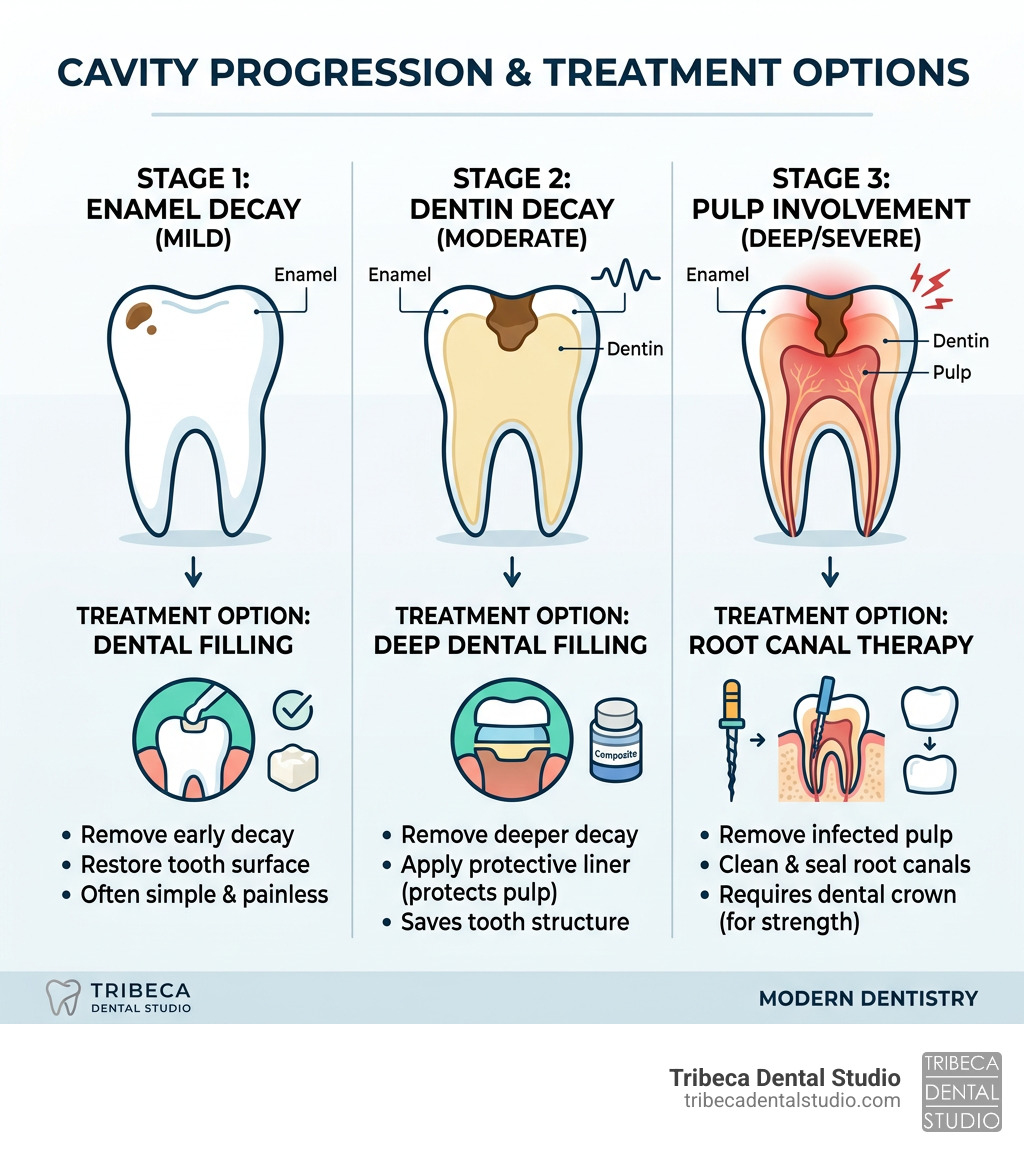
- Mild cavity: Decay is limited to the enamel (outer layer)
- Moderate cavity: Decay has reached the dentin (middle layer)
- Deep cavity: Decay has reached the inner one-third of the dentin, close to or touching the pulp (inner nerve tissue)
- Deep cavity filling: A filling — sometimes with a protective liner — is placed to restore the tooth before a root canal becomes necessary
- Root canal territory: If the pulp is infected or inflamed beyond repair, a filling alone won’t be enough
The good news? Most deep cavities can still be treated with a filling, as long as the pulp remains healthy. Catching it at this stage is the key.
By the time you notice a toothache or sensitivity to hot and cold, decay has often already progressed further than you might expect. In fact, according to a 2000 report from the US Surgeon General, roughly 78% of people have had at least one cavity by age 17 — and untreated cavities don’t stay small.
I’m Dr. Nina Izhaky, a graduate of New York University College of Dentistry and founder of Tribeca Dental Studio, where I’ve helped countless patients navigate deep cavity filling decisions using the latest mercury-free, digital techniques. Understanding your options early is the single most important step toward saving your tooth.
Deep cavity filling terms explained:
Understanding the Anatomy of a Deep Cavity
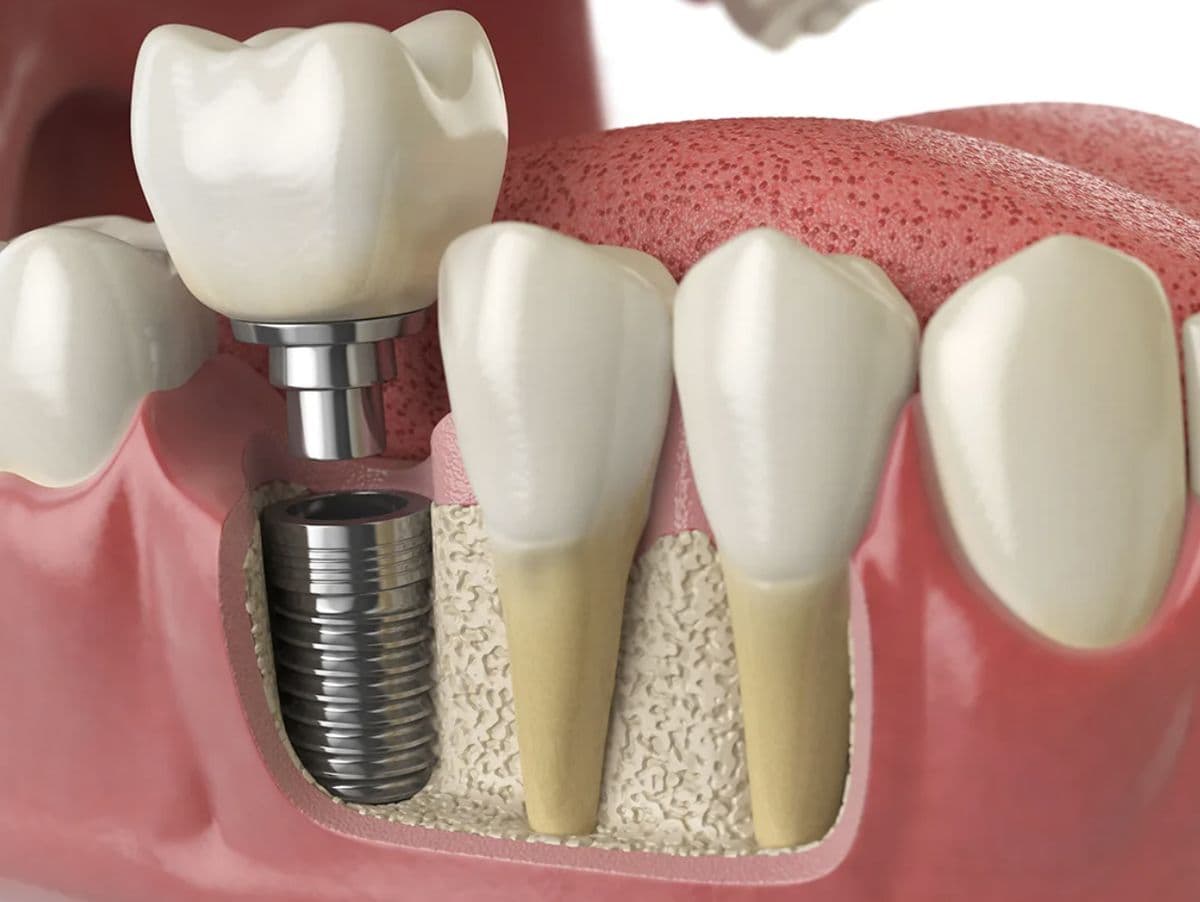
To understand why a deep cavity filling is different from a standard one, we have to look at what’s happening inside your tooth. A tooth isn’t just a solid block of calcium; it’s a complex structure with distinct layers.
- Enamel: The hard, protective outer shell. This is the hardest substance in the human body, but it’s not invincible against acid-producing bacteria.
- Dentin: Located just beneath the enamel, dentin is a softer, yellowish layer. Because it is less dense than enamel, once a cavity breaches this layer, it can spread much faster toward the center of the tooth.
- Pulp Chamber: This is the “heart” of the tooth, containing the nerves and blood vessels. When decay gets close to this area, the tooth begins to “scream” in the form of pain or extreme sensitivity.
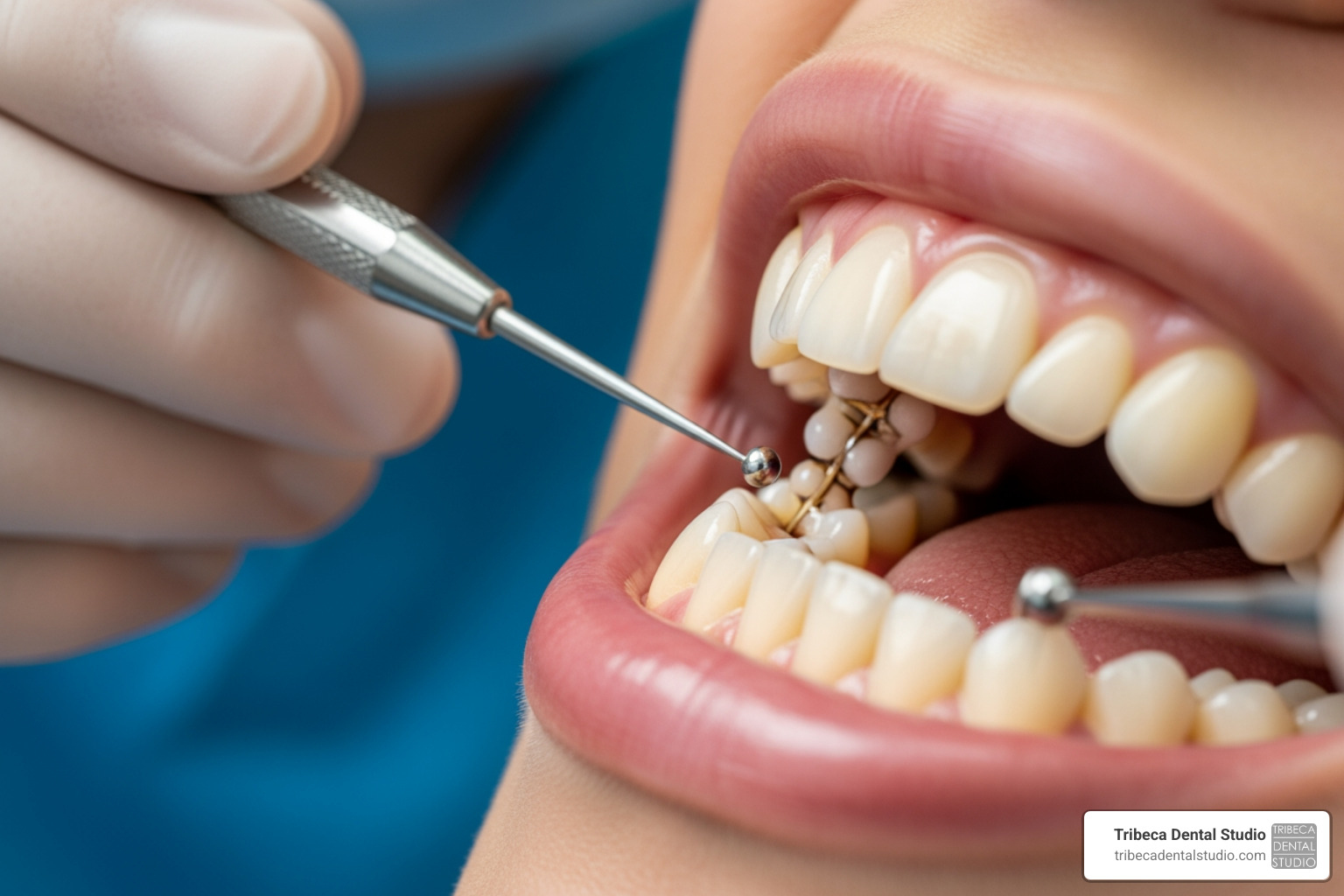
A cavity becomes “deep” when it extends through the enamel and deep into the dentin, often reaching the inner one-third of the tooth’s structure. At this stage, bacteria are dangerously close to the pulp. If the bacteria actually infect the pulp, the tooth becomes “non-vital,” and you move from needing a filling to needing a root canal.
How do we know if your cavity has reached this critical point? We start with a physical examination to check for visible holes, dark spots, or gum swelling. However, looks can be deceiving. We also rely heavily on digital X-rays to see exactly how close the decay is to the nerve. If you are experiencing persistent sharp pain or lingering sensitivity to hot and cold, consulting a dentist immediately is vital to prevent the need for more invasive surgery.
The Deep Cavity Filling Procedure: Step-by-Step
If we determine that your tooth pulp is still healthy and the decay hasn’t caused an irreversible infection, we can proceed with a deep cavity filling. This is a more meticulous process than a standard filling because we are working very close to the nerve.
1. Numbing and Preparation
First, we ensure you are completely comfortable. We use local anesthesia to provide a painless dental filling experience. You might feel a slight pressure, but the area will be entirely numb.
2. Decay Removal and Caries Detector Dye
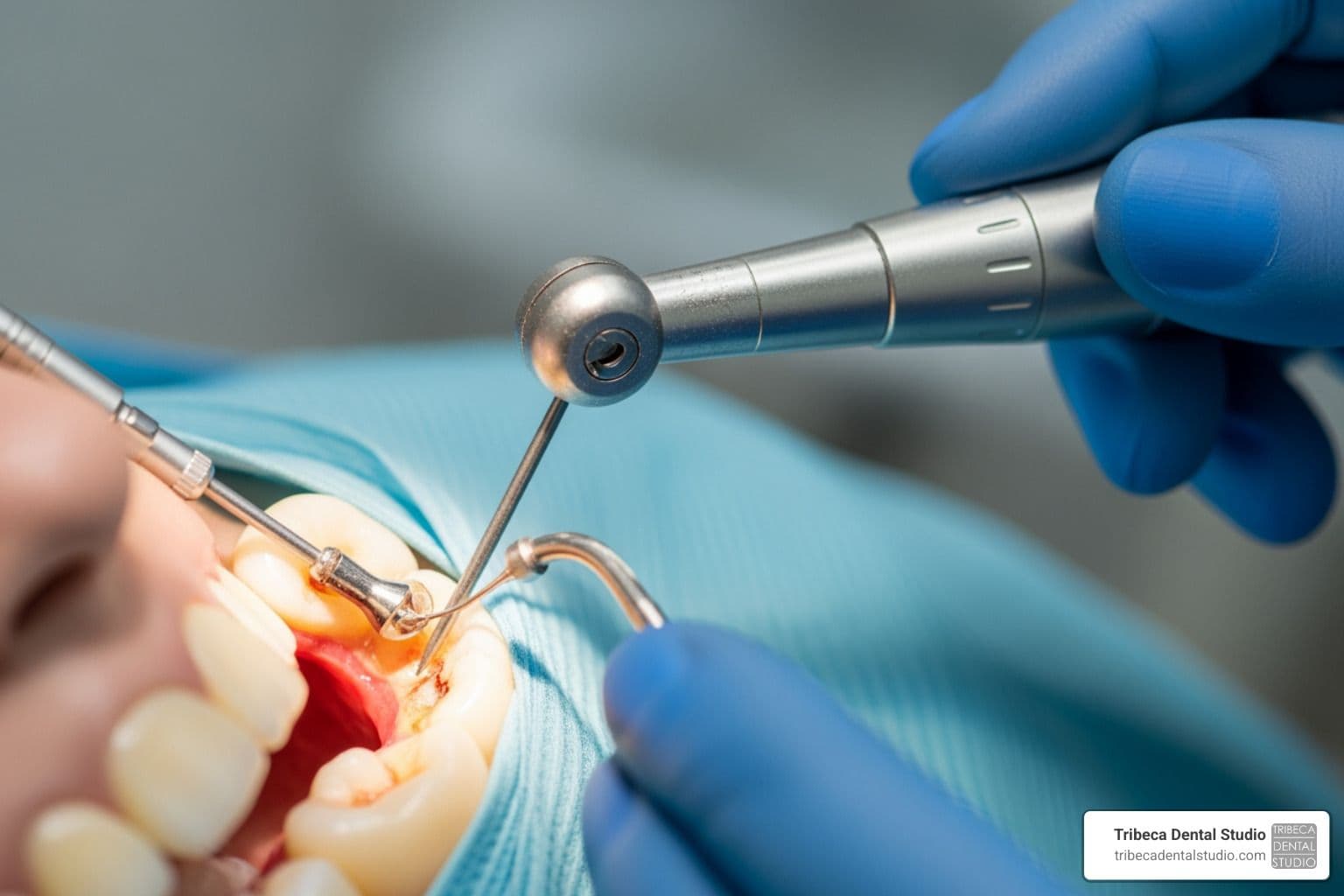
We use specialized tools (like high-speed drills, lasers, or air abrasion) to remove the decayed portion of the tooth. Here at Tribeca Dental Studio, we believe in being as objective as possible. Research shows that 59% of caries (decay) is left behind when dentists rely only on a “tactile” approach (feeling the tooth with a metal probe). To avoid this, we often use Caries Detector Dye (CDD). This dye stains only the infected tooth structure, allowing us to remove every bit of bacteria while preserving as much healthy tooth as possible.
3. Disinfection
Once the decay is removed, the “pothole” in your tooth must be thoroughly disinfected. We clean the area to eliminate any lingering pioneer bacteria that might try to sneak into the pulp after we seal the tooth.
4. Layering the Material
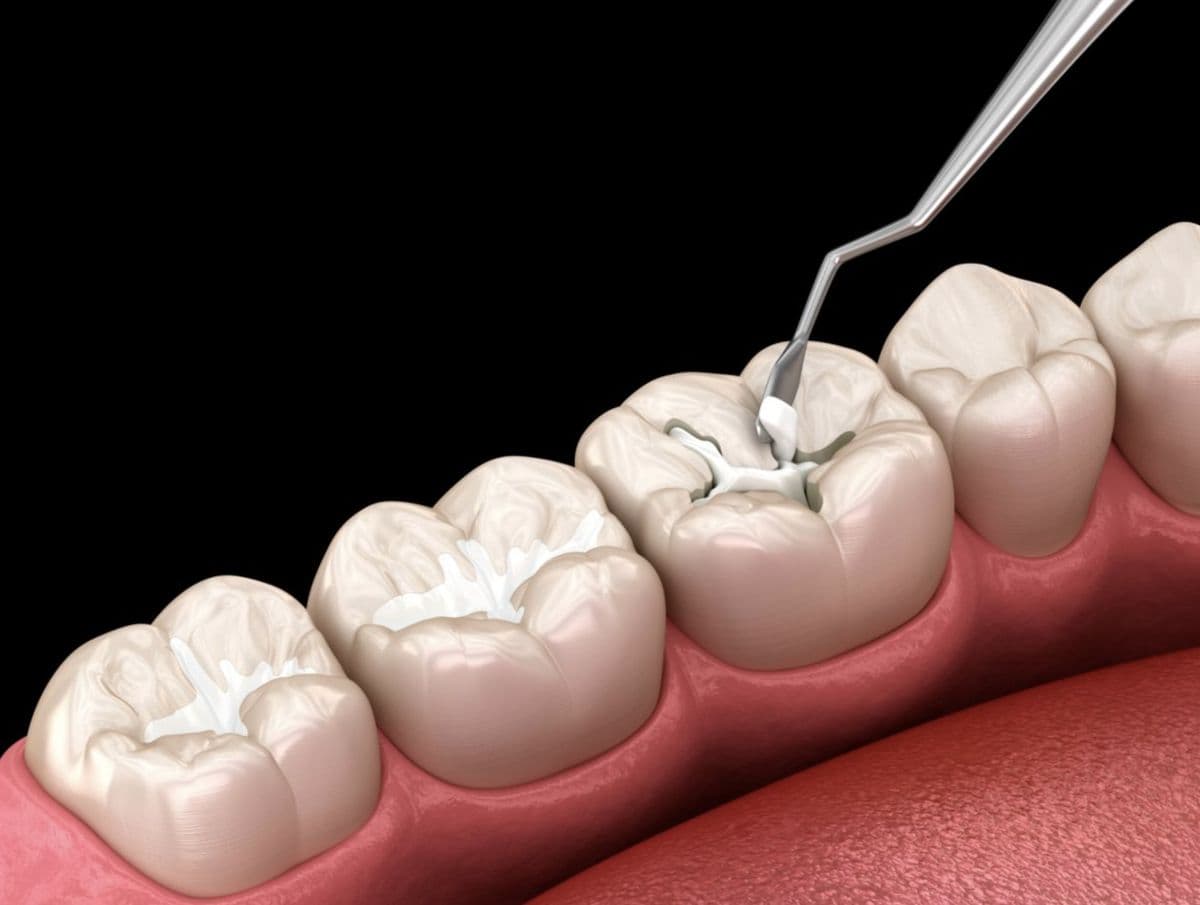
For a deep cavity filling, we typically use a composite filling material. This is a tooth-colored resin that bonds directly to your natural enamel and dentin. We apply the material in layers, curing each one with a special blue light to ensure a rock-solid bond. These tooth-colored fillings are not only aesthetically pleasing but also help reinforce the weakened tooth structure.
5. Shaping and Polishing
Finally, we shape the filling to match the natural anatomy of your tooth. We check your bite to ensure the filled tooth doesn’t hit your other teeth too hard, which could cause pain later. A final polish makes the restoration feel smooth to your tongue.
Using Pulp Capping During a Deep Cavity Filling
When decay is extremely close to the nerve, we don’t just “fill and go.” We often use a technique called pulp capping to act as a protective barrier.
- Indirect Pulp Capping: If the decay is very close to the pulp but hasn’t quite exposed it, we place a medicinal liner (like calcium hydroxide or MTA) over the thin layer of remaining dentin. This material stimulates the tooth to grow “reparative dentin,” essentially building its own wall of protection over the nerve.
- Direct Pulp Capping: If a tiny bit of the pulp becomes exposed during cleaning, we can sometimes place the medicinal liner directly on the pulp. This is most successful in younger patients with healthy, resilient tooth tissue.
These biocompatible materials are the “secret sauce” of conservative dentistry, often saving a tooth from the dentist’s “storm”—the root canal.
Recovery After Your Deep Cavity Filling
It is perfectly normal to feel some “post-operative sensitivity” after a deep restoration. Think of it like a guest who stayed too long at a party; the nerve is a bit irritated from the cleaning process and needs time to settle down.
Most patients experience a 7-day recovery window. During this week, you might feel a zing when drinking ice water or eating hot soup. This is usually due to mild inflammation of the pulp. You can manage this with over-the-counter pain relief like ibuprofen. However, if the pain is sharp when biting or if it keeps you up at night, it might mean the cavity was just a little too deep for a filling. For more details on the healing process, check out our guide on cavity filling 101.
Deep Cavity Filling vs. Root Canal: How Dentists Decide
This is the question every patient asks: “Do I really need a root canal, or can I just get a filling?” Our philosophy is always to use the most conservative method possible to save your natural tooth.
| Feature | Deep Cavity Filling | Root Canal Treatment |
|---|---|---|
| Pulp Health | Pulp is healthy or mildly irritated | Pulp is infected, dead, or abscessed |
| Pain Level | Occasional sensitivity | Persistent, throbbing, or spontaneous pain |
| Success Rate | High, if caught early | Over 95% success rate |
| Time | Usually one visit (under 1 hour) | Often 1–2 visits |
| Cost | More affordable | More expensive |
| Vitality | Tooth remains “alive” | Tooth becomes “non-vital” |
We decide based on “pulp vitality.” If the nerve is still alive and the inflammation is reversible, we go with a filling. If the decay has caused an abscess (a pocket of infection) or “irreversible pulpitis” (where the nerve simply won’t stop hurting), a root canal is the only way to save the tooth from extraction.
When a Deep Cavity Filling Isn’t Enough
Sometimes, a filling is just a “simple patch-up job” for a problem that requires a “major tune-up.” You might need a more extensive restoration if you notice:
- Persistent Pain: Sensitivity that lasts longer than a week or gets worse.
- Gum Swelling: A sign that infection has reached the bone.
- Tooth Discoloration: A darkening tooth often indicates the nerve inside is dying.
- Structural Damage: If the cavity was so large that there isn’t enough healthy tooth left to hold a filling.
In cases of significant structural loss, we might recommend inlays or onlays. These are custom-made in a lab and fit into your tooth like a puzzle piece. They are stronger than standard fillings and can last 10–30 years with good care. If the tooth is extremely weak, a dental crown after filling may be necessary to prevent the tooth from cracking under the pressure of chewing.
Long-Term Care and Prevention Strategies
A deep cavity filling is a second chance for your tooth. To make sure it lasts, you need a solid defense strategy.
- The Peripheral Seal Zone: In advanced biomimetic dentistry, we focus on creating a 3mm to 5mm “seal” around the edges of the cavity. This prevents “micro-leakage,” where bacteria try to seep back under the filling.
- Biomimetic Bonding: We use techniques that mimic the natural strength and flexibility of a tooth (30-50 MPa bond strength). This reduces the “flex” that causes traditional fillings to pop out or crack.
- Daily Maintenance: Brush twice daily with fluoride toothpaste and floss every single day. Cavities often start between teeth where your brush can’t reach.
- Sugar Reduction: Bacteria thrive on sugar. Reducing your intake of sodas and sticky candies is the easiest way to starve the decay-causing monsters in your mouth.
- Monitor Your Fillings: If you feel a sharp edge or a “catch” when flossing, your filling might be cracked. Don’t wait for it to hurt; get it checked immediately.
Frequently Asked Questions about Deep Cavities
Is a deep cavity filling painful?
No, the procedure itself is not painful because we use local anesthesia to numb the entire area. You might feel some pressure as we work, but no sharp pain. You may experience some mild sensitivity to hot and cold for up to a week after the procedure as the nerve heals.
What is the typical cost of a deep cavity filling?
The cavity filling cost depends on the size of the cavity and the material used. Generally, a deep cavity filling is significantly less expensive than a root canal and crown. In Manhattan, prices can vary based on the complexity of the restoration, but it is always a more cost-effective option than waiting until the tooth requires a root canal.
How long do deep fillings last?
With excellent oral hygiene and regular checkups, a composite deep cavity filling typically lasts between 5 to 15 years. However, if we use high-end materials like porcelain inlays or onlays, they can last up to 30 years. The longevity depends largely on your brushing habits and whether you grind your teeth.
Conclusion
At Tribeca Dental Studio, led by Dr. Nina Izhaky, we believe that your natural teeth are worth saving. A deep cavity filling is often the “calm before the storm”—a final opportunity to restore your health before more invasive and expensive treatments like root canals or extractions become necessary.
Our personalized approach ensures that we use the most conservative, biomimetic methods to protect your smile. We treat our New York City patients like family, providing a welcoming environment where your comfort is our top priority. If you’re feeling a “zing” in your tooth or it’s been a while since your last checkup, don’t wait for the pain to scream. Learn more about dental fillings in NYC or schedule your visit with us today in the heart of Tribeca. Early intervention is the best gift you can give your smile!