Filling the Gap: A Smooth Journey Through Your Dental Filling
May 21, 2026

Why the Dental Filling Procedure Is Less Scary Than You Think
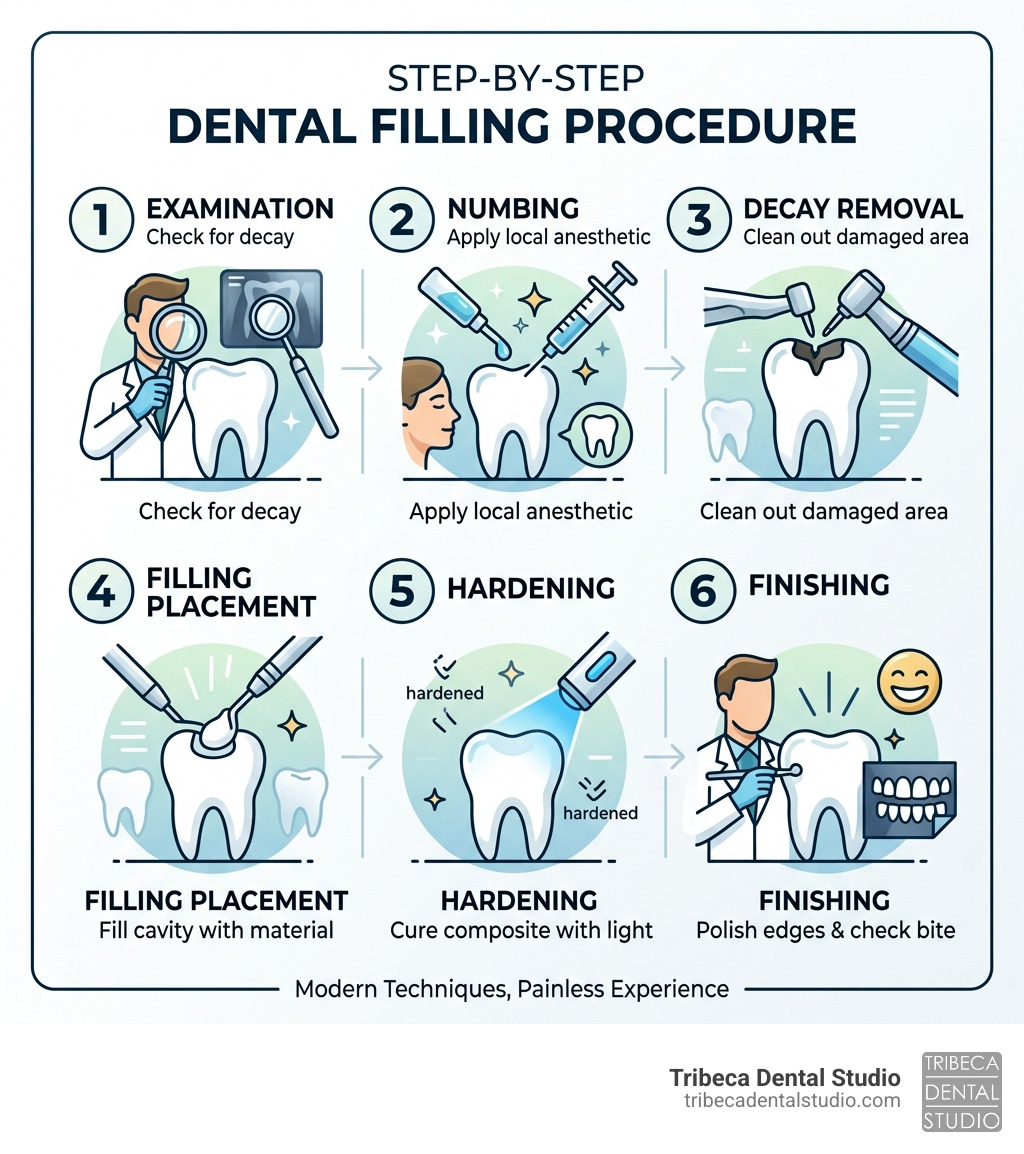
A dental filling procedure is one of the most common — and most misunderstood — treatments in dentistry. Here’s what it actually involves, start to finish:
- Examination — Your dentist checks for decay using a probe, dye, or X-ray
- Numbing — A topical gel is applied, followed by a local anesthetic injection
- Decay removal — The damaged tissue is removed with a drill or laser
- Filling placement — The cavity is filled with your chosen material (composite, amalgam, gold, etc.)
- Hardening — Composite fillings are cured with a special light
- Finishing — Edges are polished and your bite is checked with carbon paper
The whole process typically takes 30 to 60 minutes — often less for a single tooth.
Many people put off treatment because they expect pain or a long, stressful procedure. In reality, modern techniques make the experience smooth and largely painless. Untreated cavities, on the other hand, can progress to infections, abscesses, or tooth loss — problems that are far more involved to fix.
I’m Dr. Nina Izhaky, a graduate of New York University College of Dentistry and founder of Tribeca Dental Studio, where I’ve guided countless patients through the dental filling procedure using mercury-free, tooth-colored materials in a fully digital, modern environment. In this guide, I’ll walk you through everything — from choosing the right filling material to what to expect on the day and beyond.
Learn more about Dental filling procedure:
Understanding the Dental Filling Procedure and Why It’s Necessary
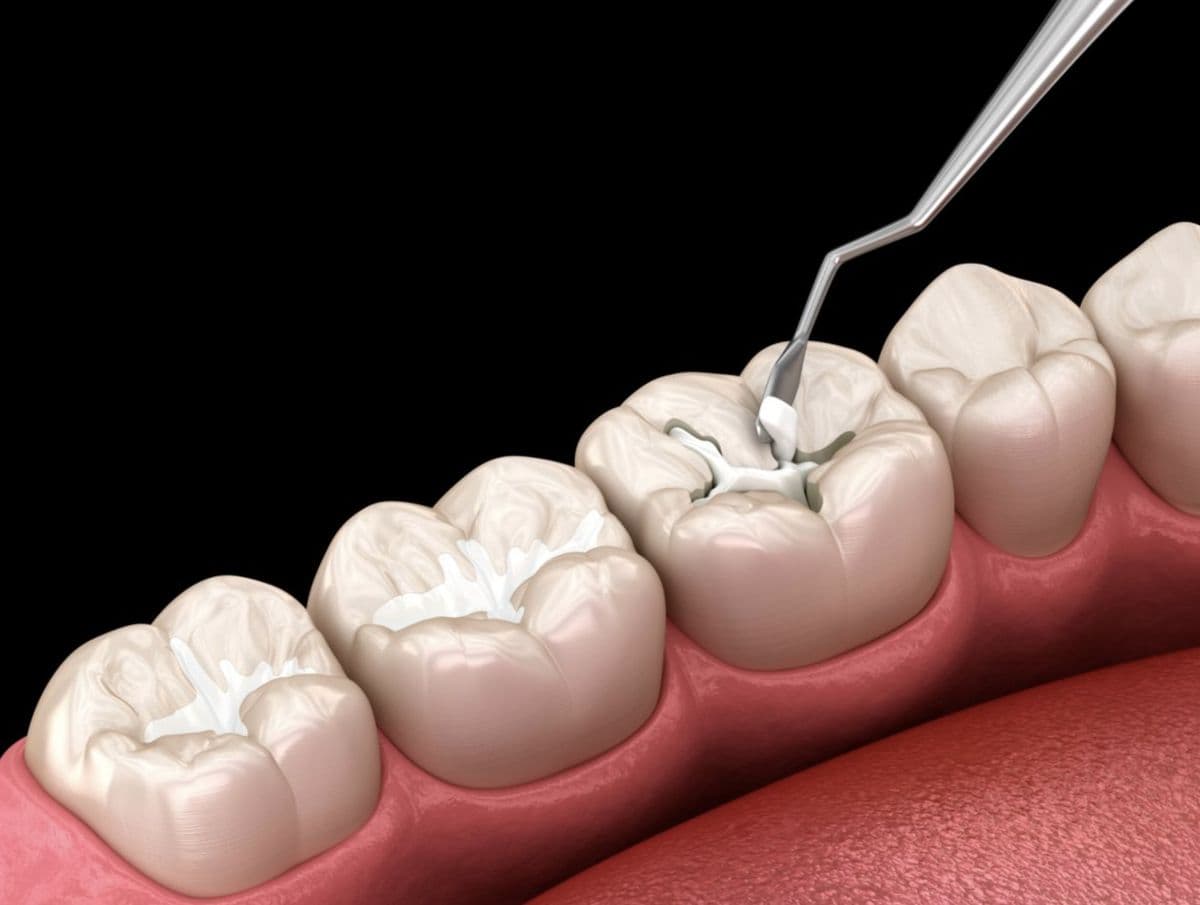
At its core, a What is a Filling is a way to restore a tooth damaged by decay back to its normal function and shape. When we perform a dental filling procedure, we first remove the decayed tooth material, clean the affected area, and then fill the cleaned-out cavity with a filling material.

Why is this so important? By closing off spaces where bacteria can enter, a filling also helps prevent further decay. If a cavity is left untreated, the bacterial infection can move deeper into the tooth, past the enamel and dentin, reaching the pulp. This often leads to painful abscesses, bone loss, and the need for more invasive treatments like root canals or even extractions.
A Painless Dental Filling preserves the structural integrity of your natural tooth. Think of it like patching a small hole in a roof before the next storm hits; it’s much easier to fix the leak now than to replace the entire ceiling later. In restorative dentistry, fillings are our first line of defense in keeping your smile intact and functional for years to come.
How Long Does a Dental Filling Procedure Take?
One of the biggest concerns patients have is how much time they need to carve out of their day. In April 2026, we utilize advanced techniques that make the Dental Fillings: The Basics of Dental Restorations faster than ever.
Typically, a single dental filling procedure takes between 30 and 60 minutes. If you have multiple cavities in the same area of the mouth, we can often address them in a single visit to save you time. The duration depends on the size of the cavity and the material being used. For example, a simple composite filling might be quicker than a complex gold inlay that requires more precise shaping.
Signs You Might Need a Restoration
How do you know if it’s time to book an appointment? While some cavities are invisible to the naked eye, your body often sends signals. Common signs include:
- Temperature Sensitivity: A sharp sting when drinking hot coffee or eating ice cream.
- Visible Holes or Dark Spots: If you see a pit or a brown/black spot on your tooth, decay has likely set in.
- Persistent Toothache: A dull ache or sharp pain when biting down.
- Referred Pain: Sometimes, decay in a lower tooth can make an upper tooth feel like it hurts, or even cause sinus-like pressure.
According to Dental Fillings (Restorations) | HealthLink BC, regular checkups are vital because we can catch these issues using X-rays or laser fluorescence before they even cause you pain.
Choosing Your Material: Amalgam vs. Composite vs. Gold
Not all fillings are created equal. When you come into our NYC office, we’ll discuss which material best fits your needs based on the location of the cavity, your budget, and your aesthetic preferences.
| Material | Durability | Aesthetics | Best For |
|---|---|---|---|
| Composite Resin | 5–15 years | High (matches tooth) | Front teeth/visible areas |
| Silver Amalgam | 10–15 years | Low (metallic) | Back molars (heavy chewing) |
| Gold Inlays | 20+ years | Unique (metallic) | Maximum longevity |
| Porcelain/Ceramic | 15+ years | High (stain resistant) | Large restorations |
The Whats In Your Mouth A Look At Common Cavity Filling Materials guide highlights that Composite Filling Material is the most popular choice in 2026. Because it bonds chemically to the tooth structure, it provides further support and requires less of the healthy tooth to be removed during preparation. For a more detailed breakdown of these options, you can explore Dental Fillings: Types, Materials & What They’re For.
Safety of Amalgam and Modern Alternatives
There has been much debate over the years regarding silver amalgam fillings because they contain elemental mercury. While the ADA and FDA currently state that amalgam is safe for the general population, the FDA updated its guidelines to suggest that certain high-risk groups — such as pregnant women, nursing mothers, children under six, and people with pre-existing neurological conditions — should avoid them if possible.
At Tribeca Dental Studio, we prioritize your peace of mind. We offer Tooth Colored Fillings that are entirely mercury-free. These modern resins are not only safer for sensitive groups but also blend seamlessly with your natural smile, so no one even has to know you had work done.
Step-by-Step: What to Expect During Your Dental Filling Procedure
Knowing exactly what happens in the chair can significantly reduce dental anxiety. Here is the typical roadmap of a Cavity Filling 101 From Numbing To A New Smile:
- Numbing and Preparation: We start by applying a topical numbing gel to the gum area. Once the surface is numb, we administer a local anesthetic injection. Most patients describe this as a tiny pinprick. For those with higher anxiety, we offer nitrous oxide (laughing gas) or other sedation options to ensure you are completely relaxed.
- Decay Removal: Once you are fully numb, we use a dental drill or, in some cases, a laser to remove the decayed portion of the tooth. You will feel pressure and hear some noise, but you should not feel any pain.
- Cleaning and Etching: After the decay is gone, we clean the space of bacteria and debris. For composite fillings, we apply an acid etching gel to “roughen” the surface on a microscopic level, which helps the bonding agent stick.
- Layering the Filling: The material is applied in layers. If we are using composite resin, each layer is hardened using a specialized blue curing light.
- Final Checks: Once the cavity is filled, we move on to the finishing touches.
For more technical details on the tools used, What to know about cavity fillings and the procedure provides an excellent overview of the clinical process.
Preparing for Your Dental Filling Procedure Appointment
Preparation is simple! You don’t usually need to fast for a standard filling unless you are undergoing deep sedation. We recommend:
- Brushing and Flossing: Clean your teeth normally before coming in.
- Morning Appointments: If you suffer from dental anxiety, scheduling your visit for the morning prevents you from worrying about it all day.
- Medical History: Be ready to update us on any new medications or health changes, especially if you have heart conditions that might require pre-procedure antibiotics.
Finishing Touches and Bite Alignment
The last step is crucial for your comfort. We use a thin strip of carbon paper and ask you to bite down. This “bite test” shows us if the filling is too high. If it is, we’ll file it down and polish it until it feels exactly like your natural tooth. A “high” filling can cause significant pain once the anesthesia wears off, so we take our time to get this right.
Aftercare, Recovery, and Managing Post-Filling Sensitivity
Recovery from a dental filling procedure is usually very quick. The local anesthesia will wear off within a few hours. During this time, be extremely careful not to bite your tongue or cheek — you won’t feel it until the numbness is gone, and it can be quite painful later!
It is normal to experience some sensitivity to hot and cold temperatures or pressure for a few days. This usually subsides within a week or two. If you feel a sharp pain when biting, your filling might need a slight adjustment. Don’t panic; just give us a call! You can find more tips on handling unexpected issues in our Filling Gone Rogue Your Emergency Guide. If you suspect your filling has been damaged, check out My Filling Cracked.
Eating and Long-Term Maintenance
You can generally eat as soon as the numbness wears off. However, we suggest:
- Soft Foods: Stick to things like yogurt, mashed potatoes, or soup for the first 24 hours.
- Avoid Sticky Stuff: Avoid very chewy candies or hard nuts that could dislodge a fresh restoration.
- Oral Hygiene: Continue brushing twice a day and flossing daily. Using a fluoride mouthwash can help strengthen the enamel around the new filling.
- Bruxism Care: If you grind your teeth at night, a custom night guard is essential to prevent your fillings from cracking under the pressure. Learn more about Cracked Filling Repair if you’ve already experienced this.
Costs, Longevity, and Potential Complications
The cost of a dental filling procedure in Manhattan can vary based on the size of the cavity and the material chosen. On average, you might expect to pay between $150 and $350 per tooth, though high-end materials like gold or porcelain inlays will cost significantly more. Most dental insurance plans cover a large portion of the cost for “basic” restorations like amalgam or composite.
For a deeper dive into the financial aspect, see our Cavity Filling Cost and the Composite Filling Cost Guide.
Longevity of Materials
- Amalgam: ~12 years
- Composite: ~7–10 years
- Gold/Porcelain: 20+ years
Fillings don’t last forever. They are subjected to incredible pressure every time you chew. Over time, they can pull away from the tooth, creating a microscopic gap where bacteria can hide. This is called recurrent decay. If a cavity is too large for a standard filling, we might recommend a Dental Crown After Filling to protect the remaining tooth structure.
When to Call Your Dentist
While complications are rare, you should contact Tribeca Dental Studio if you experience:
- A “High” Bite: If your teeth don’t meet normally when you close your mouth.
- Galvanic Shock: A sharp, “electric” zing that can happen if a new amalgam filling touches a gold crown.
- Sharp Edges: If the filling feels rough to your tongue.
- Signs of Infection: Fever, swelling in the gums, or persistent throbbing pain.
Frequently Asked Questions about Dental Fillings
Can I eat normally right after the procedure?
You should wait until the numbness wears off completely to avoid accidentally biting yourself. If you have a composite (tooth-colored) filling, it is hardened instantly with a light, so you can chew on it right away. Amalgam fillings take longer to fully set, so we usually recommend avoiding hard foods on that side for 24 hours.
How long do different types of fillings last?
As mentioned, gold is the gold standard, often lasting 20 years or more. Amalgam typically lasts about 12 years, while composites usually need replacement every 7 to 10 years, though with excellent care, they can last much longer.
Is the dental filling procedure painful if I have anxiety?
Not at all. With modern local anesthetics, the area is completely numbed. You will feel pressure and vibration, but no pain. At Tribeca Dental Studio, we specialize in helping anxious patients feel at home. From “laughing gas” to a warm, welcoming environment, we ensure your journey is as smooth as possible.
Conclusion
A dental filling procedure doesn’t have to be a source of stress. It is a routine, effective, and vital part of maintaining your oral health. By addressing decay early, you save yourself from more complex procedures and keep your natural teeth strong and beautiful.
At Tribeca Dental Studio, Dr. Nina Izhaky and our dedicated team are here to provide the highest level of care in the heart of NYC. We treat every patient like family, ensuring your comfort is our top priority. If you suspect you have a cavity or it’s just time for your regular checkup, don’t wait for the pain to start.
Dental Fillings In Nyc Natural Durable Aesthetic Restorations At Tribeca Dental Studio/
Ready to restore your smile? Contact Tribeca Dental Studio today to schedule your consultation!